Home / Blog / The Journey to Sustainable Leather: What You Should Know
The Journey to Sustainable Leather: What You Should Know
Full-grain, chrome-free, built for decades — how to read a hide before you buy, and why it matters.
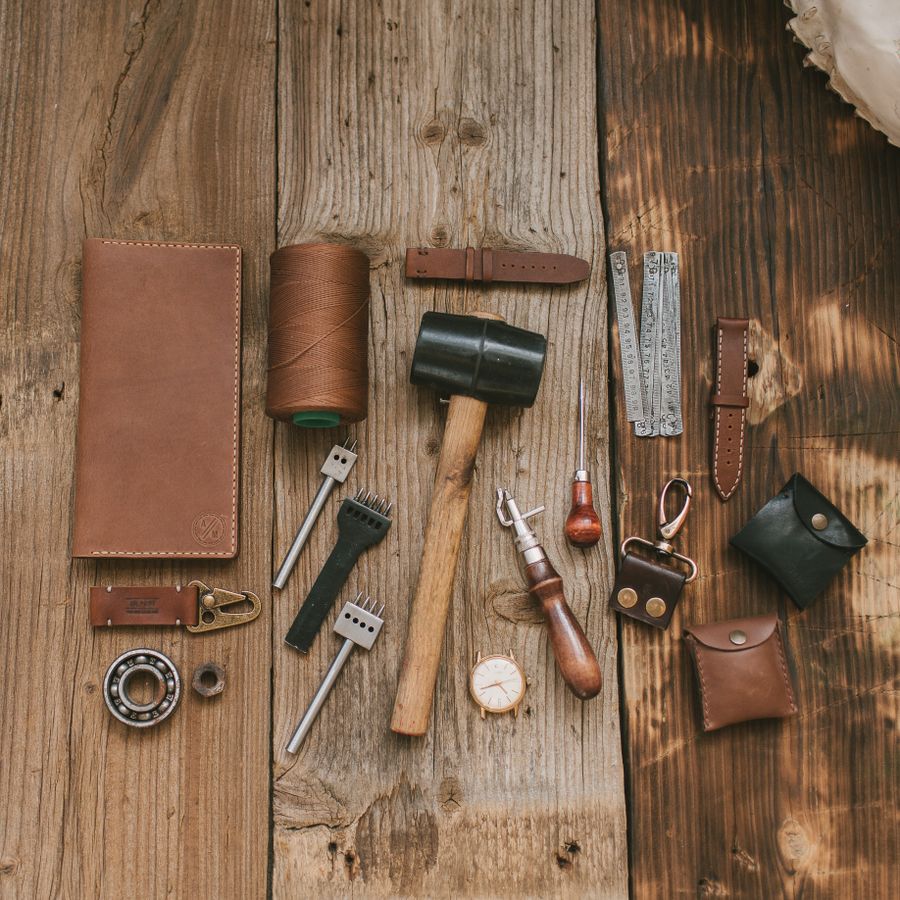
Not all leather is made the same — and the difference matters for your wallet, your wardrobe and the world behind them. In this guide we unpack what vegetable tanning actually means, why chrome-free hides age more gracefully, and which questions to ask before you buy your next bag, belt or jacket.
First, look at the edge. A cleanly burnished edge with visible dense fibres usually signals a full-grain hide; a plasticky painted edge often hides a split. Second, bend it: quality leather creases softly and the colour lightens for a moment before settling back. Third, smell it — real tannins carry a warm, woody note no synthetic can fake for long.
At Rivetwood we work exclusively with gold-rated tanneries, cut only full-grain panels, and publish the origin of every hide we stitch. It costs more up front. It costs far less per decade.